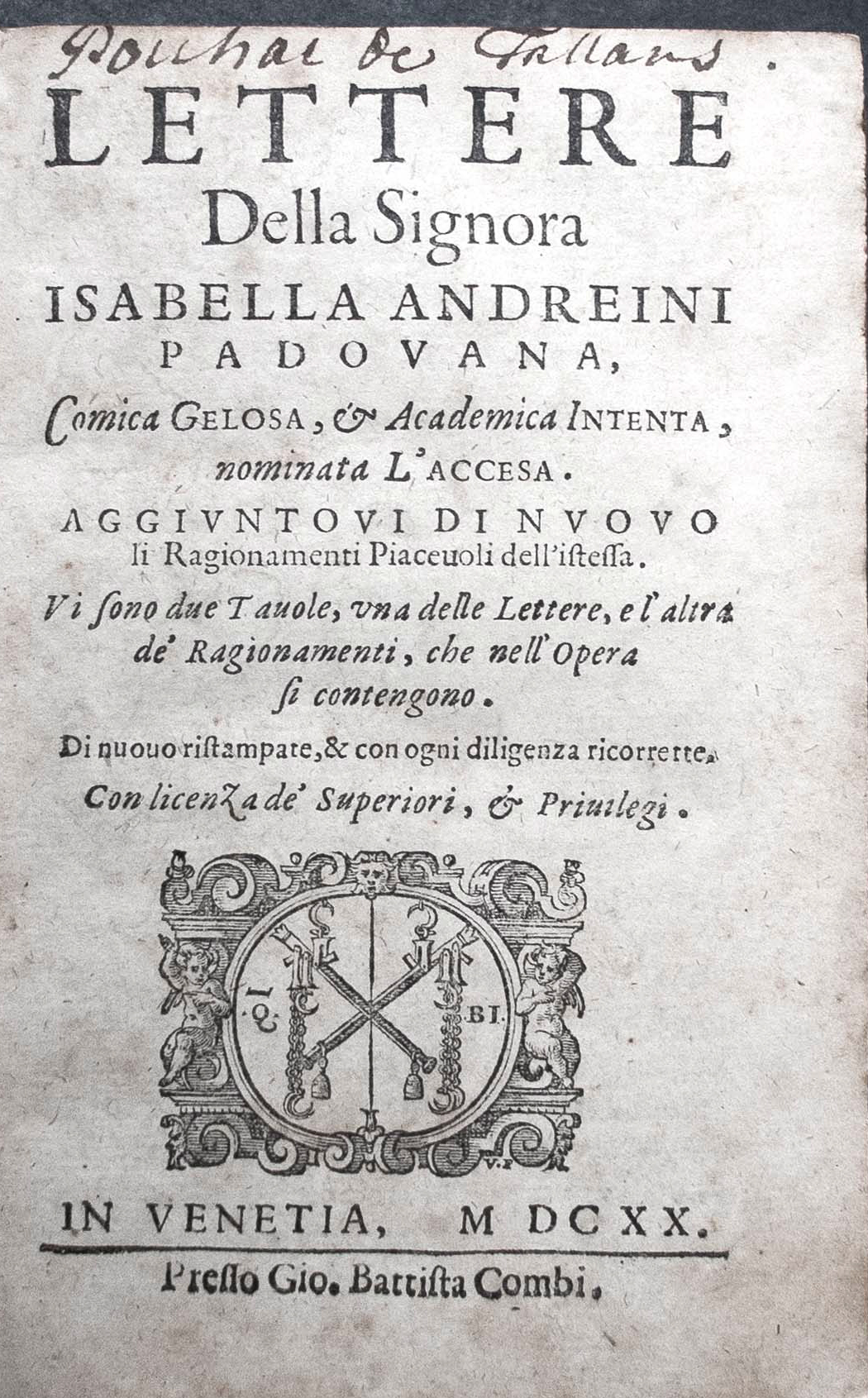
Lettere della Signora Isabella Andreini Padovana, comica gelosa, et academica intenta, nominata l’accesa. Aggiuntovi di nuovo li Ragionamenti piacevoli del’istessa…
Date 1620, Venice: Giovanni Battista Combi
Author Andreini, Isabella.
Price $2500
(163 x 105 mm). Two parts in one volume, each with separate title page (second title reads: “Fragmenti di alcune scritture…” ). [24], 268, [4 blank]; 180, [4 blank] pages. Printer’s device on title pages. Large woodcut initials. Bound in 18th century in plain leather over pasteboard, spine in six compartments decorated with gilt tools and stamps, raised bands, red leather title label. Edges stained red. Marbled endleaves. Upper joint cracked but holding, with small chip lacking at base of spine and old repair at headcap. Occasional light foxing, with small ink drops (pages 19 and 164-5 of the first part, p.89 of the second). Old ownership inscription in upper margin of title page; modern ex-libris of Mario Bagliani (1926-1990), noted collector of books related to theater arts.
References: Ferri, p. 14 (not this edition); Vinciana 3319; Michel I, 142, #7; Graesse I, 121 (noting this as the sixth edition of the epistolary).
The star female player of the well-known Gelosi troupe, Isabella Andreini enjoyed fame as “the most celebrated commedia dell’arte actress of her century,” says Prof. Meredith K. Ray. She wrote prolifically for the stage, including a series of plays in which she acted the title role under her own name (Lucky Isabella, Jealous Isabella, Isabella’s Madness). She also produced several volumes of poetry. The volume of “Lettere” offered here was first printed in 1607, three years after the author’s death (in childbirth), and saw many subsequent editions. It is joined, with a separate title page and pagination, by a series of serio-comic dialogues, the “Ragionamenti piacevoli,” or “Fragmenti,” as they are called on the dedicated title page.